
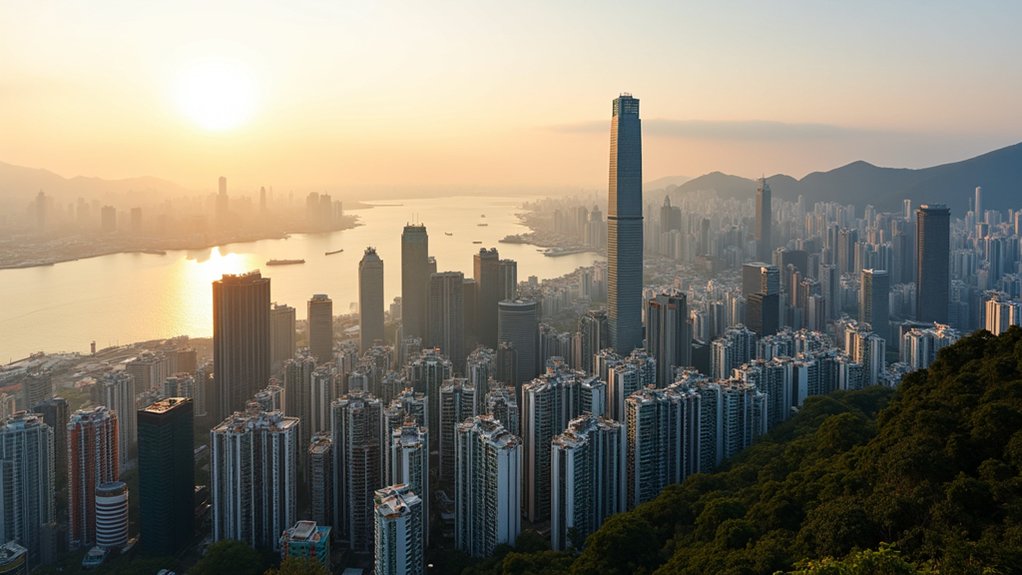

Hong Kong’s residential market snapped back hard in April, with 7,368 sale and purchase agreements signed — the highest monthly tally since April 2024’s 8,551 units and a 29.4% jump year-on-year that’s difficult to dismiss as seasonal noise.
Total residential sales value hit HK$63.7 billion, up 15.4% month-on-month and a striking 50.9% year-on-year. These aren’t soft numbers dressed up with optimism — they’re a genuine signal that buyers who sat on the sidelines have decided the floor is in.
What surprises me most isn’t the volume — it’s where the confidence is coming from. Secondary-market transactions carried much of Q1’s weight, rising 13% quarter-on-quarter, while primary launches in Kowloon and New Territories sold out in initial rounds. That combination tells you this isn’t just developer-driven momentum. Real end-users are moving, and that changes the texture of any recovery meaningfully.
Here’s the contrarian read: developers quietly pulling back on incentives as primary sales strengthen suggests they believe pricing power is returning faster than the public narrative acknowledges. Some analysts have already revised full-year price growth forecasts upward to 8–10%. When sellers stop discounting, you’re no longer in a buyer’s market — even if it still feels like one.
For buyers and investors watching from the outside, the practical implication is this — waiting for a deeper correction may cost you more than the correction ever would’ve saved you. Prices posted monthly gains of 1.8% in February and 1.4% in March. A unit at Cullinan Harbour transacted at roughly HK$65,000 per square foot. The luxury end, often a leading indicator, logged 96 deals above HK$78 million in Q1 alone, up 19% quarter-on-quarter. Total transaction volumes rose 9% quarter-on-quarter to 18,654 units in Q1 2026, underscoring the breadth of demand across all market segments. Broader property recovery has also extended beyond residential, with investment volume jumping 60% in Q1, defying the regional average gain of just 18%.
Leasing demand is tightening too, especially in Wong Chuk Hang, Ap Lei Chau and Western District, where relocating mainland professionals are absorbing stock. Mass-market rents are up 4.7% year-on-year; luxury rents surged 11.2%. If rental yields continue compressing cap rates, the investment case strengthens further heading into 2026. This mirrors a broader regional trend, as real estate investment volumes across Asia-Pacific — including Singapore’s 28% year-on-year surge to S$28.62 billion in 2024 — reflect a market class reasserting itself as a safe haven amid global uncertainty.