
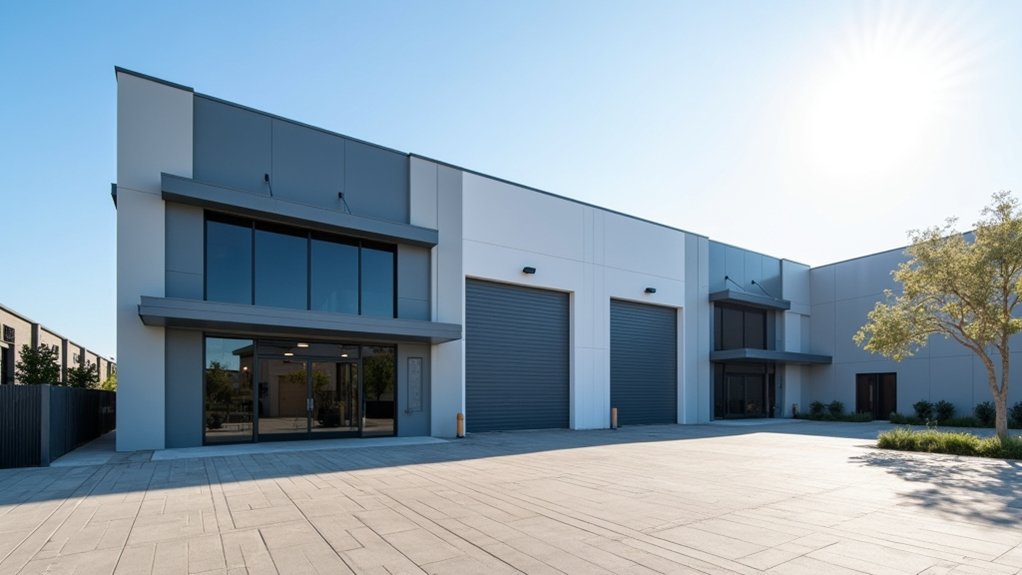

Affordable industrial space in Western Sydney doesn’t stay affordable for long — and GATE+, a new B2 strata development launching from $792,000 per unit, is banking on exactly that anxiety to move stock fast.
Affordable industrial space in Western Sydney doesn’t stay affordable for long — and the window is closing fast.
The project targets SMEs, tradespeople, and logistics operators who’ve watched industrial rents climb and land supply shrink, and who now want a foothold before the window closes entirely.
The units themselves are solid on paper. You’re looking at high-clearance, clear-span warehouses with roller door access, loading bays configured for small rigid trucks, and optional office mezzanines.
Floorplates run 100 to 400 square metres — practical sizing for owner-operators who need real working space, not just a glorified storage locker. Power allocations and sprinkler-ready infrastructure round out a spec sheet that’s genuinely functional rather than flashy.
Location does real work here. GATE+ sits within Western Sydney’s industrial belt, threading access to the M4, M5, and M7 corridors, with freight routes reaching Port Botany, Sydney Airport, and interstate lanes. The development is positioned within Bankstown Airport’s Gateway precinct, placing occupants directly inside an established transport and logistics hub with rail, sea, and air freight connectivity already in place.
Compare that to the Bankstown Airport precinct or the Silverwater corridor, where comparable B2 strata stock has already priced out many first-time buyers. GATE+ is pitching itself as the last affordable seat at a table that’s nearly full.
Here’s the contrarian read, though: strata industrial ownership isn’t passive. You’re taking on levies, common area obligations, and a resale market that’s thinner and slower than residential.
Buyers chasing capital growth need to understand that the same constrained supply story driving prices up also limits your exit pool. I’ve seen investors learn that the hard way in Singapore’s industrial strata sector, and Western Sydney’s market rhymes closely enough to warrant the caution. In Singapore’s office market, for instance, commercial tenancy agreements typically specify rent, lease duration, security deposits, and maintenance responsibilities — layers of obligation that strata buyers often underestimate until they’re already committed.
For serious buyers — especially owner-occupiers — the calculus still works. Lock in your operating base, build equity in an asset you control, and hedge against rental exposure in a market where industrial vacancy is stubbornly tight. The development sits on Parramatta Road with high exposure, giving occupants a visibility advantage that compounds both operational and brand value over time.
The yield projections in the marketing materials deserve scrutiny, but the underlying demand case doesn’t. As Western Sydney’s freight and e-commerce infrastructure matures, the assets closest to those arteries will age well.