
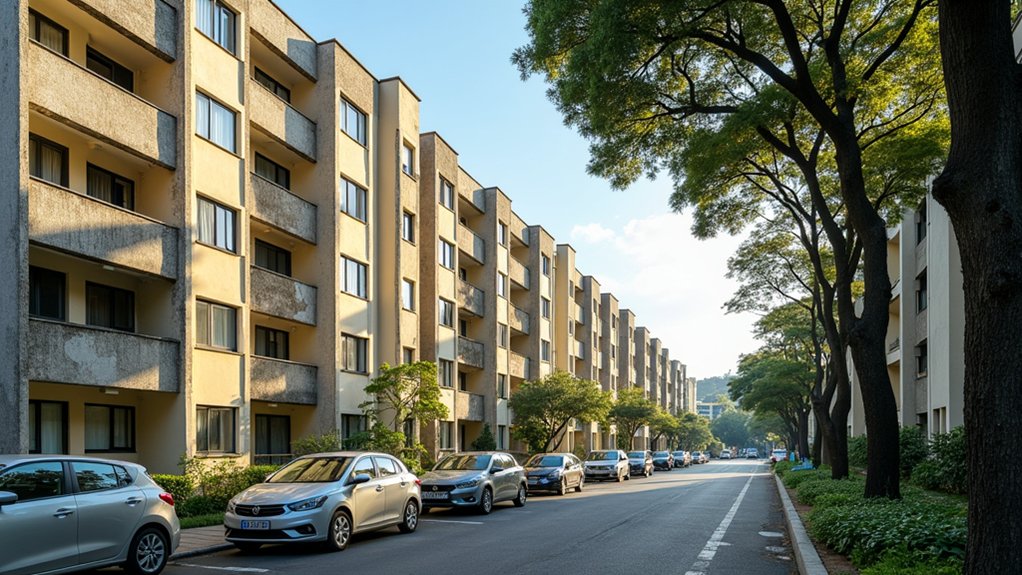

The resale market for ageing HDB flats has quietly staged a comeback that few of us saw coming. I’ve spent fifteen years watching Singapore’s property cycles, and I’m struck by how quickly we’ve rewritten the rules about what makes a flat desirable. The old narrative—that older equals riskier—is crumbling.
The old narrative—that older equals riskier—is crumbling.
Demographics are reshaping demand in ways I didn’t anticipate. The CPF age-95 guideline has created an unexpected sweet spot: buyers in their mid-50s and beyond can now deploy their full CPF savings on flats with roughly 39 years remaining. That’s opened a door many assumed was closed.
Meanwhile, I’m seeing right-sizers—empty nesters cashing out of private condos or large HDB units—actively hunting smaller, older flats to release equity and slash maintenance headaches. Multi-generational families are gravitating toward rare adjoined units and multi-gen layouts that newer estates simply don’t replicate. And young professionals? They’re renting these ageing units near MRT stations and employment hubs, fuelling buy-to-rent interest that didn’t exist a decade ago. The numbers tell the story: 3,042 transactions for flats aged 40-plus in the first half of 2024 alone, a record that signals structural, not speculative, demand. Sales data confirms that older flats now account for the largest proportion of total HDB resale transactions. Policy changes offering more flexibility when taking up HDB loans have also removed friction for buyers considering older properties.
Here’s what surprises me most: older flats in prime locations are now outpacing younger ones on price growth. In Q2 2024, some datasets showed 8% year-on-year appreciation for ageing stock—higher than their newer counterparts. This resilience is further underscored by the broader market context, where HDB resale prices rose 1.6% quarter-on-quarter in Q1 2025, marking twenty consecutive quarters of uninterrupted growth.
Units near the Greater Southern Waterfront corridor are commanding S$800-plus per square foot, while adjoined and multi-generation flats in desirable towns occasionally breach million-dollar thresholds. The scarcity premium is real; these configurations are finite, and developers aren’t building more.
So what does this mean for you? If you’re a younger buyer, don’t dismiss older flats outright—but budget for larger cash components when CPF limits bite. Banks are offering shorter tenors, which strains monthly servicing. If you’re an older buyer, you’ve got leverage you’ve never had before. The financing mechanics now favour your demographic in ways that seemed impossible five years ago.
I keep returning to Jurong, where the upcoming Region Line stations like Pandan Reservoir are breathing new life into ageing estates. It reminds me of Tiong Bahru’s transformation—once overlooked, now coveted. The narrowing price gap between new and old resale stock suggests we’re witnessing a permanent repricing of maturity and location over lease length. Tomorrow’s buyers may not remember when older flats carried stigma at all.