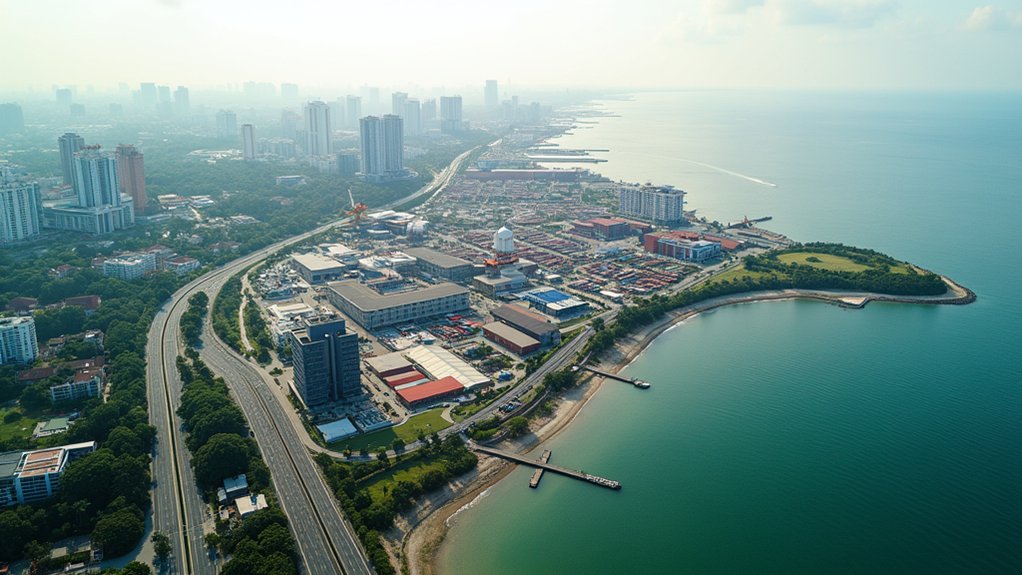

Stretching some 30 kilometres from Marina East all the way to Tuas, the Greater Southern Waterfront isn’t just Singapore’s largest urban transformation project — it’s the single biggest structural bet the government has made on Pasir Panjang in decades, and it’s already starting to reprice the area in investors’ minds.
Stretching 30 kilometres of coastline, the Greater Southern Waterfront is already quietly repricing Pasir Panjang in investors’ minds.
What makes this particularly compelling isn’t the scale — it’s the sequencing. Port activities are being incrementally relocated, freeing up waterfront parcels for high-density mixed-use development combining residential, commercial, and recreational uses. That phased approach is deliberate. It protects existing economic activity while quietly assembling one of the most valuable land banks in the city-state.
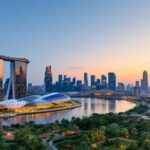
Here’s the contrarian read most people miss: Pasir Panjang has historically been dismissed as too industrial, too peripheral. But that’s exactly why the upside is so underpriced. Compare it to how Marina Bay was perceived before the integrated resorts landed — sceptics called it a glorified reclamation project. Today it anchors Singapore’s financial district. Pasir Panjang is following a structurally similar playbook, just on a longer runway.
For buyers and investors, the practical implication is timing. Connectivity upgrades — Thomson-East Coast Line extensions, improved Ayer Rajah Expressway interchanges, cycling and pedestrian promenades linking to the CBD — are still incoming. Infrastructure that hasn’t been completed yet typically hasn’t been fully priced in. That gap between infrastructure commitment and infrastructure delivery is historically where the strongest capital appreciation occurs in Singapore residential submarkets.
The government’s targeting of technology, marine sciences, logistics tech, and green finance sectors also signals a deliberate effort to diversify Pasir Panjang beyond its port identity. Thousands of jobs across construction and long-term service phases will create sustained housing and commercial demand. PPP frameworks and incentive schemes are already designed to pull private capital in. The transformation is further underpinned by approximately 213 hectares of reclamation proposed across the southern coastline, forming contiguous land that will directly connect Labrador and Harbourfront through to Marina Bay. Anchoring this early transformation is the former Pasir Panjang Power Station, a 15-hectare decommissioned site earmarked as the first piece of the Greater Southern Waterfront to be developed, with its heritage power station buildings slated for adaptive reuse.
I’ve covered Singapore real estate for fifteen years, and the areas that generate generational wealth for early movers are always the ones that look slightly uncomfortable before the transformation completes. This mirrors how Marina Bay’s 1991 Concept Plan designated the area as a strategic project, unlocking decades of high-value commercial and residential development that transformed a reclaimed shoreline into Singapore’s most iconic business district. Pasir Panjang sits precisely at that uncomfortable, opportunity-rich inflection point right now.