
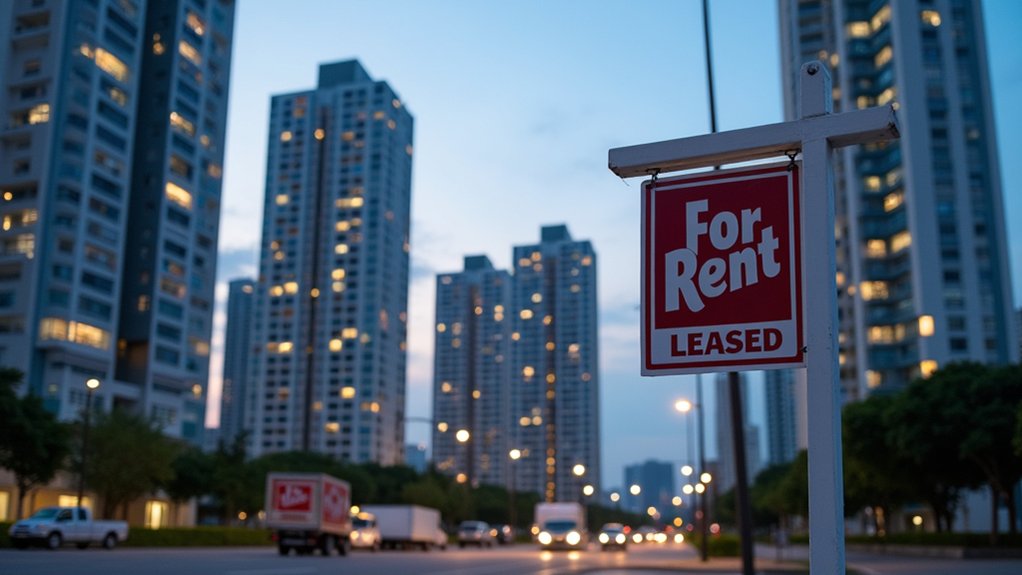

Although the broader rental market in Singapore had already entered a phase of moderation by 2025, December closed the year with a notable rebound in both condominium and HDB leasing activity, underscoring the resilience of the sector despite increasing supply-side headwinds.
Market data indicated that a year-end leasing surge was the primary driver of this revival, with rental volumes for both private non-landed homes and public housing flats remaining above year-ago levels even as headline rent growth showed signs of stabilisation. This late-year strength in the leasing market stood in contrast to the private new home sales segment, where December 2025 new home sales fell 39.4% from November on the back of a typical holiday lull. In line with this stabilisation theme, overall rental prices are projected to see low single-digit growth in 2026 as new supply continues to enter the market.
Market data showed a year-end leasing surge kept rental volumes elevated, even as overall rent growth stabilised
In the private residential segment, non-landed rental contracts edged up 0.6% for the full year to around 82,000 in 2025, reflecting sustained occupier demand. Meanwhile, overall private rents grew at a more measured 2.5–3% compared with the sharper swings seen in preceding years.
December 2025 registered a 0.2% month-on-month increase in condominium rents, a modest price gain that contrasted with the pronounced rise in leasing transactions, suggesting that landlords prioritised occupancy and cashflow over aggressive rent hikes.
Industry observers pointed to this divergence between volume and price as evidence of a maturing rental cycle, following a 1.9% decline in private rents in 2024 and a subsequent stabilisation phase. Throughout this period, tenancy agreements continued to specify security deposits typically amounting to one month’s rent for annual leases and two months for two-year leases.
Within the higher-end segment, luxury non-landed rents posted a 2% increase in 2025, recovering from a 4.3% drop in 2024. The December momentum reinforced perceptions that expatriate demand, particularly in prime districts, remained intact.
This was occurring in a market still mostly owner-occupied, with 85.3% of non-landed private households owner-occupied in 2024, thereby limiting the pool of investible rental stock and lending support to occupancy rates during the year-end leasing rush.
The December rebound was also underpinned by structural demand factors that had been building since the rental boom originating in 2022, when border reopenings met with tight housing supply.
Between June 2024 and June 2025, Singapore’s foreign worker population expanded by about 34,000, rising 2.7% to 1.91 million. This incremental labour inflow continued to underpin leasing demand in both centrally located private condominiums and mass-market estates, reinforcing the December 2025 surge despite an increasingly competitive landscape for landlords.