
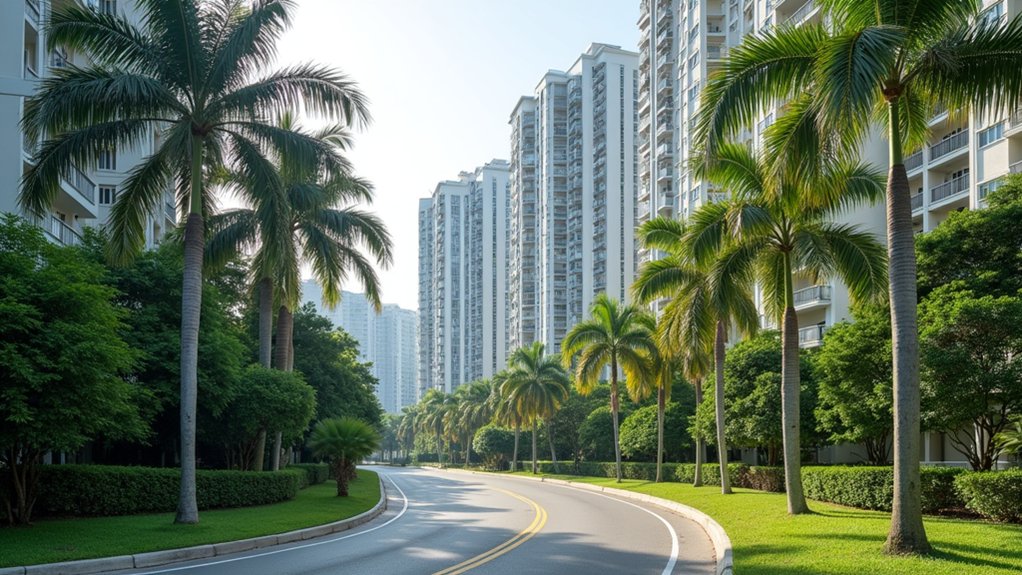

Paradoxically, Loyang Valley‘s S$880 million collective sale may look cheaper than its headline suggests, yet that’s exactly why developers could still hesitate. I’ve covered enough en-bloc cycles to know that a lower sticker price doesn’t automatically make a giant site easier to swallow. Here, the guide works out to about S$936 psf ppr after factoring in major cost items, including estimates for Land Betterment Charge and lease top-up.
For a sprawling 840,648 sq ft leasehold site with about 56 years left, that’s not outrageous. But size cuts both ways.
Loyang Valley has 362 units today, dating back to 1985, and owners stand to receive roughly S$1.67 million to S$3.9 million depending on unit type. Huttons Asia has been marketing the site across multiple tender attempts in 2025 and 2026, after earlier reserve markers of S$750 million in 2018 and S$980 million in 2022. That pricing path tells its own story. This isn’t just a sale; it’s a referendum on whether developers feel confident enough to take on a project that could yield around 1,249 homes. The tender opened on Jul 8 and closes on Sep 9, setting a clear tender timeline for the market to respond.
The obvious pitch is compelling: a 1.6 plot ratio under the 2019 Master Plan, future Loyang MRT on the Cross Island Line, and long-term upside from Changi East, Terminal 5, the industrial zone and nearby employment hubs. If you want to belong to the next growth pocket in the east, this location makes emotional and practical sense. Notably, the 80% owner mandate was secured as early as May 2025, signalling unusually strong resident consensus ahead of the tender launch.
Still, my contrarian take is this: infrastructure promise can actually make bidding harder, not easier. Developers may prefer to wait until planning clarity improves on access, off-site works, density and even airport-related height limits. Add competition from GLS sites and you can see why some bidders may stay disciplined. The committee’s decision to relaunch only came after regulatory clarity improved on some of those cost and planning concerns.
So what does this mean for buyers and investors? Don’t assume a successful tender, if it comes, will translate into cheap future launches. Large projects carry absorption risk, higher financing exposure and careful phasing decisions. Those costs usually travel downstream.
If a bid finally lands, I’d read it less as a bargain hunt and more as a long bet that Loyang is ready to join Singapore’s next-circle communities.