
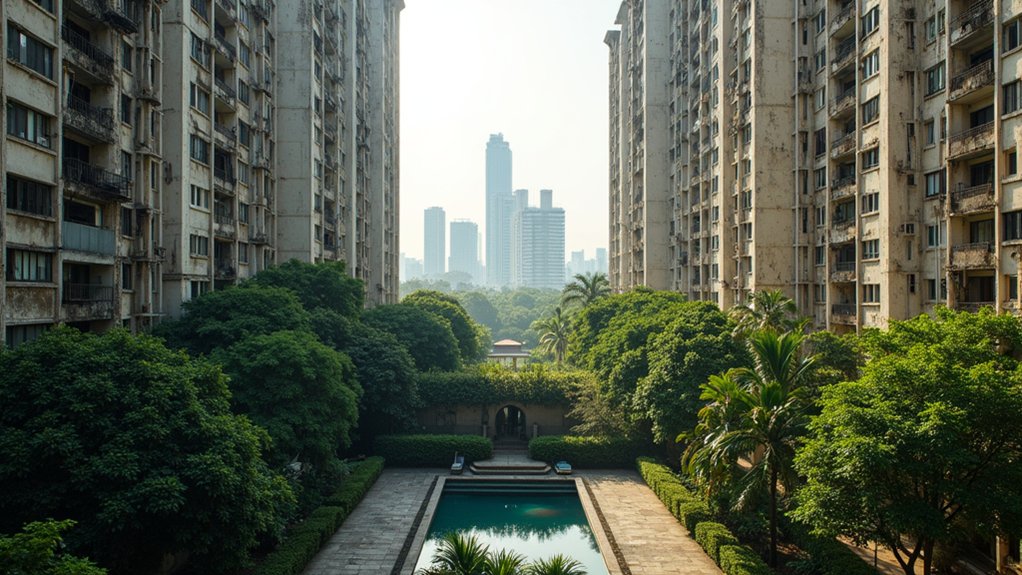

Condominium ageing is emerging as a material issue within Singapore’s private residential stock, with more than 1,000 of the country’s 3,750 strata developments already at least 30 years old, including 836 out of 2,703 condominium developments, or roughly 31%, which means about one in three condos has crossed a threshold commonly associated with higher capital expenditure, more frequent systems failure, and tighter maintenance constraints for management corporations strata title (MCSTs). This ageing profile is projected to deepen, with the number of older condominiums rising to about 1,160 within 10 years if no en bloc sales occur, extending the operational and financial implications across a larger share of the market.
About one in three Singapore condominiums is already over 30 years old, with ageing-related cost and maintenance pressures set to widen.
That shift is gradually influencing what buyers assess when comparing projects. Age, once treated largely as a proxy for lease or aesthetics, now intersects more directly with maintenance resilience, reserve funding, and the likelihood of disruptive remedial works, particularly where lifts, waterproofing systems, and electrical infrastructure are operating beyond intended lifespans. As these assets deteriorate, the cost and complexity of maintaining safety, functionality, and regulatory compliance rise, and those pressures are ultimately borne collectively by subsidiary proprietors through MCST-administered budgets and sinking funds. In a market where private condominium prices are projected to rise about 3% in 2026, moderate price growth may further sharpen buyer focus on whether older projects have the financial resilience to absorb major upgrades without unexpected strain.
The issue is sharpened by evidence that some developments may not hold sufficient sinking funds for major repairs or replacements, a constraint that becomes more acute as more projects move beyond the 30-year mark. Proposed reforms consequently centre on both transparency and execution, including requirements for MCSTs to submit financial statements and facilities records to the Building and Construction Authority, with key financial information potentially made public, alongside changes to voting thresholds for essential upgrades from 75% to a 50% majority, subject to safeguards against procedural gaming. Separately, the authorities are considering a proxy cap per household to reduce the risk of small owner groups exerting outsized influence over upgrade decisions.
Government proposals also indicate where ageing-related buyer priorities may continue shifting. Essential upgrades under discussion include senior-friendly features and solar panels, while partial public funding is being considered for lift and escalator safety improvements, and broader private-building participation in renewal programmes could reduce cost barriers for accessibility and universal design works. Notably, HDB resale prices have risen 20 consecutive quarters, underscoring how sustained public housing appreciation may redirect some demand toward private resale stock, including older condominiums where entry prices remain comparatively lower. Against a market backdrop where condo prices are forecast to rise 3% in 2026, with 24 new condominium launches and five executive condominium projects expected, ageing stock is increasingly differentiated not only by location and price, but by governance capacity, upgrade readiness, and asset-maintenance credibility.