
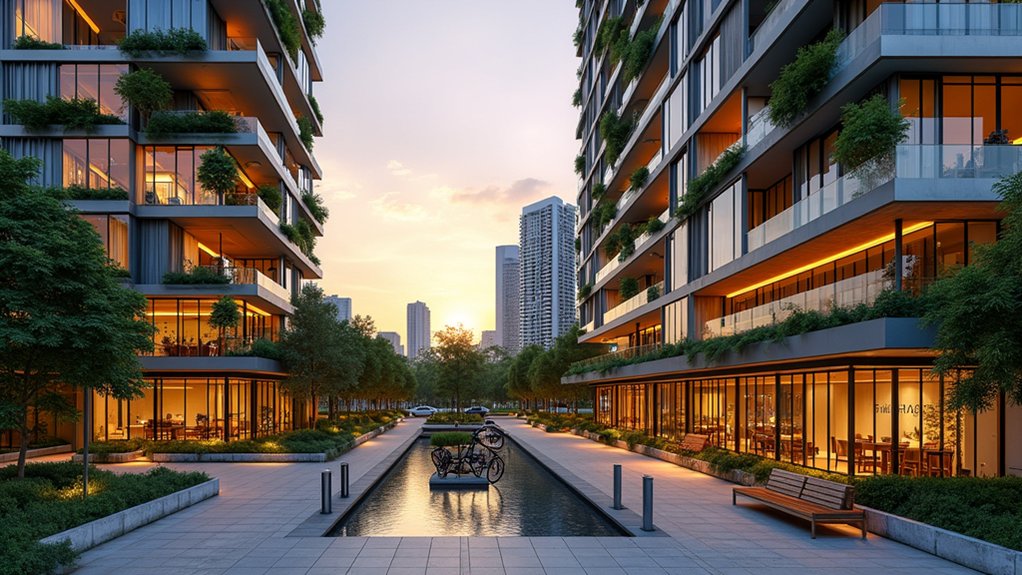

A wave of suburban mixed-use developments is positioned to reshape metropolitan growth patterns in 2026, driven by sustained migration to suburban markets where housing affordability and quality-of-life considerations continue to attract residents seeking alternatives to urban core price premiums. These projects increasingly adopt integrated “mini-downtown” configurations that combine residential, office, retail, dining, and green space within single master-planned ecosystems, responding to growing consumer preference for walkable, live-work-play environments that reduce travel time and transportation costs.
Suburban mixed-use formats primarily feature horizontal arrangements with complementary single-use buildings distributed across larger sites, including retail pads, multifamily structures, and medical office facilities. Design emphasis centers on walkability through street-level retail activation, public plazas, and reduced building setbacks that diverge from conventional suburban zoning norms.
The repositioning of aging shopping centers and over-retailed legacy corridors into higher-density districts represents a significant development trend, with projects layering housing and office components above or adjacent to existing retail anchors. With office vacancies remaining above 19% since 2025, adaptive reuse of underperforming commercial buildings into residential units has become an increasingly viable strategy for suburban redevelopment. The over-retailed U.S. market provides substantial opportunity for this mixed-use redevelopment approach across suburban corridors nationwide.
Zoning reform acceleration provides critical regulatory support for 2026 project launches, addressing a national housing shortage estimated at 2.8 million units through targeted changes to historically single-family suburban land designations. Municipalities increasingly expand allowable housing types to include duplexes, triplexes, and small multifamily buildings in districts previously restricted to detached single-family homes.
The adoption of planned development designations and form-based codes enables mixed-use intensity when projects conform to adopted area plans, while reduction or elimination of blanket off-street parking minimums lowers development costs and supports higher-density configurations. Enhanced connectivity through underground walkway integration with transit stations exemplifies infrastructure solutions that strengthen the accessibility profile of mixed-use developments.
Post-pandemic workplace dynamics further reinforce suburban mixed-use demand, with embedded office nodes supporting hybrid work arrangements and reducing commute burdens for professionals and companies.
Technology integration advances through deployment of smart building systems and AI-powered analytics that optimize energy use, operations, and tenant experience across these developments.
Climate resilience and infrastructure planning considerations increasingly influence comprehensive plans that explicitly favor higher-density, walkable growth nodes. The convergence of demographic preferences, regulatory flexibility, and technological capability positions suburban mixed-use developments as a defining real estate category entering 2026.