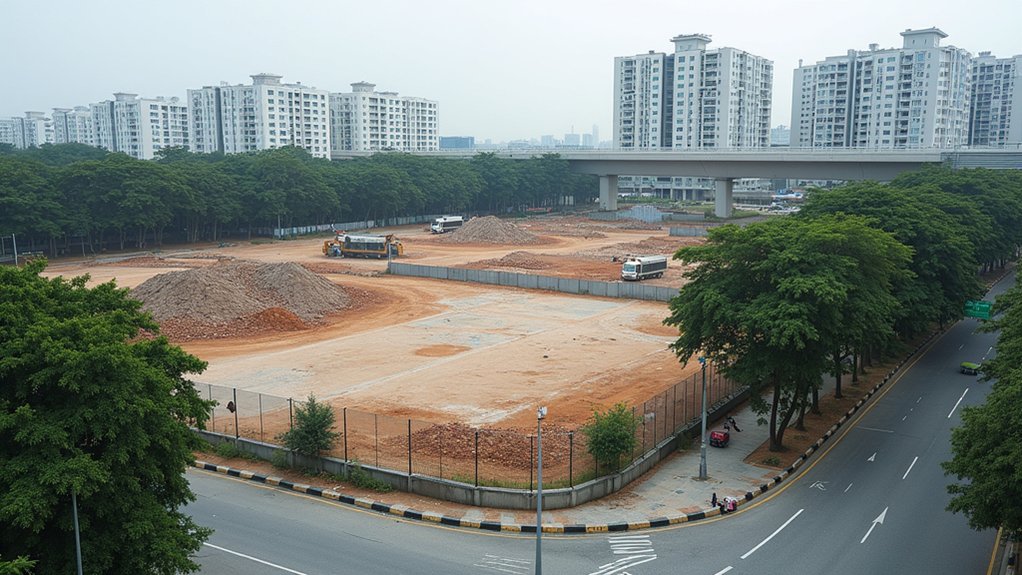

One former school campus in Jurong East could be remade into as many as 1,800 homes, and that’s a bigger story than the headline number suggests. I’m looking at the former Shuqun Secondary School site at Jurong East Street 21, including its field, and what stands out isn’t just capacity. It’s timing. This roughly 3-hectare plot sits about 400 metres from the future Toh Guan MRT station on the Jurong Region Line, due in 2028, while staying close to Jurong East interchange, malls, bus links and the wider Jurong Lake District. The land was occupied by Shuqun Secondary from 1985 until 2019 before later being used for Covid-19 testing and vaccination, which gives the site a distinct recent civic use in addition to its school history.
Jurong East’s former Shuqun campus could yield 1,800 homes, but its real advantage is timing, connectivity and future rail access.
URA’s proposed Master Plan 2025 amendment would raise the gross plot ratio from 3.5 to 5.0 and rezone the land for housing. This also fits a broader school-site rezoning pattern, with at least 10 education sites shifted from education to housing since November 2019. Depending on layout, tenure and whether the old sports field is counted fully, analysts have sketched a wide range: around 1,150 to 1,250 HDB flats at one end, and roughly 1,600 to 1,800 private homes under a denser condominium scheme. That flexibility matters because this neighbourhood is full of 1980s HDB stock, and fresh supply here would feel less like isolated insertion than gradual renewal.
Here’s the less obvious point: more density here doesn’t automatically mean a harsher living environment. If planners get the street level right, higher intensity could actually make the area feel more complete, with shops, community uses and greener pedestrian links stitching residents into everyday life near Yuhua Village Market, nearby schools and existing bus corridors. The Master Plan 2025 process itself drew on extensive public feedback to shape how urban density and liveability are balanced across Singapore’s evolving neighbourhoods.
So what does this mean for buyers and investors? In plain language, a well-located new project here should attract real demand. Teban Heights, the October 2025 HDB launch in Jurong East, drew 2,418 applications for 638 units. That tells me pent-up demand is real. Private supply is also relatively thin in Jurong East, which could support take-up and pricing, especially among first-time buyers, nearby upgraders and future Tengah households after MOP.
For context, Jurong projects tied closely to rail access have usually commanded stronger attention than older estates without that advantage. This site should benefit from the same logic. I’d watch not just unit numbers, but whether agencies choose to preserve some memory of Shuqun’s past. If they do, this could become more than redevelopment; it could become a place people feel they belong in.