
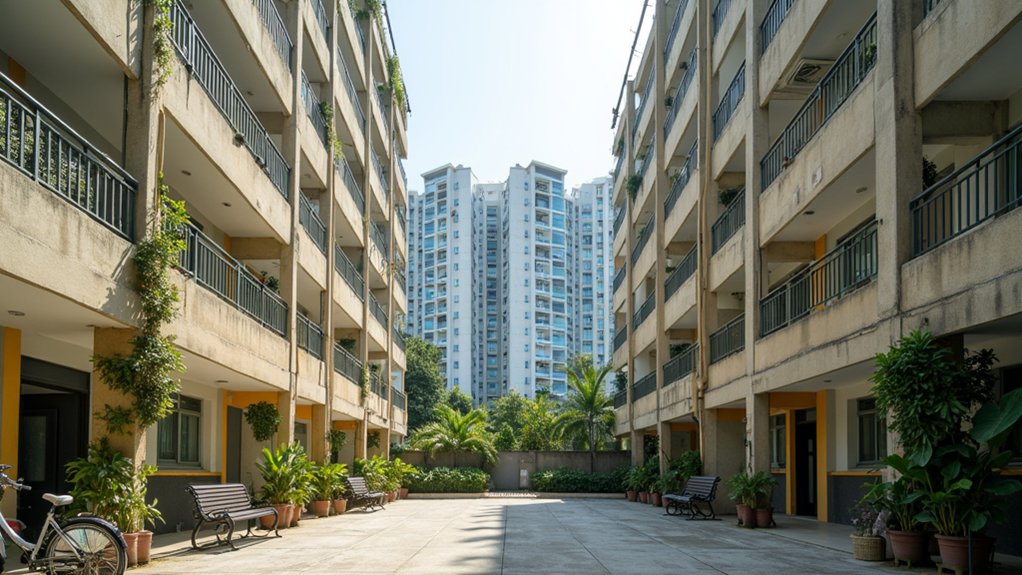

Something’s quietly breaking down in the younger HDB resale flat market — and the numbers in Q2 2026 make it hard to ignore. Transactions for resale flats under 10 years old crashed 21.8% year-on-year to just 1,222 units last quarter, the weakest second-quarter showing in six years. That’s not a blip. That’s a structural shift.
Transactions for younger HDB resale flats didn’t slow — they crashed. This isn’t a blip. It’s a structural shift.
Here’s what I find striking: younger resale flats now account for only 19.7% of total HDB resale transactions — the lowest share since Q2 2019. Just two years ago, these flats were commanding premium attention precisely because they felt like a smarter middle path between aging resale stock and long BTO waits. That middle path is collapsing.
The contrarian take? Rising prices didn’t kill demand — they redirected it. Average prices for younger resale flats climbed 21.2% over three years, hitting S$751,361 in Q2 2026. Buyers didn’t disappear. They simply got smarter, migrating toward June 2026’s BTO launch, which offered four-room flats from roughly S$302,000 before grants. When a newer flat costs less than half the price of a younger resale unit, the math stops being complicated.
For buyers and investors watching this space, here’s the plain truth: if you’re holding a younger resale flat hoping to sell at a premium, your buyer pool just shrank markedly. With only 2,322 younger resale units sold in the first half of 2026 — compared to 5,459 in the same period last year — you’re competing harder for fewer qualified buyers who are also eyeing BTO alternatives with three-year wait times in places like Sembawang and Ang Mo Kio. That competitive pressure deepened further after the launch of Plus and Prime flats in October 2024, which accelerated the decline in younger resale flat market share.
The softer jobs market isn’t helping either. Longer selling timelines — now stretching two to three months or more — reflect genuine buyer hesitation, not just market rotation. Overall resale transaction volumes fell 10.2% year-on-year to 6,268 units in Q2 2026, underscoring how broadly demand has softened across the entire HDB resale market. This stands in stark contrast to the broader resale market’s earlier momentum, where million-dollar HDB transactions surpassed 1,500 units in 2025 alone, driven largely by mature estates and larger flat types.
I’ve covered this market through multiple cycles, and what’s different now is the convergence: policy, pricing, and macro headwinds all pointing the same direction. Unless BTO supply tightens or the economy rebounds sharply, younger resale flats face a prolonged period of recalibration — and sellers should price accordingly.