
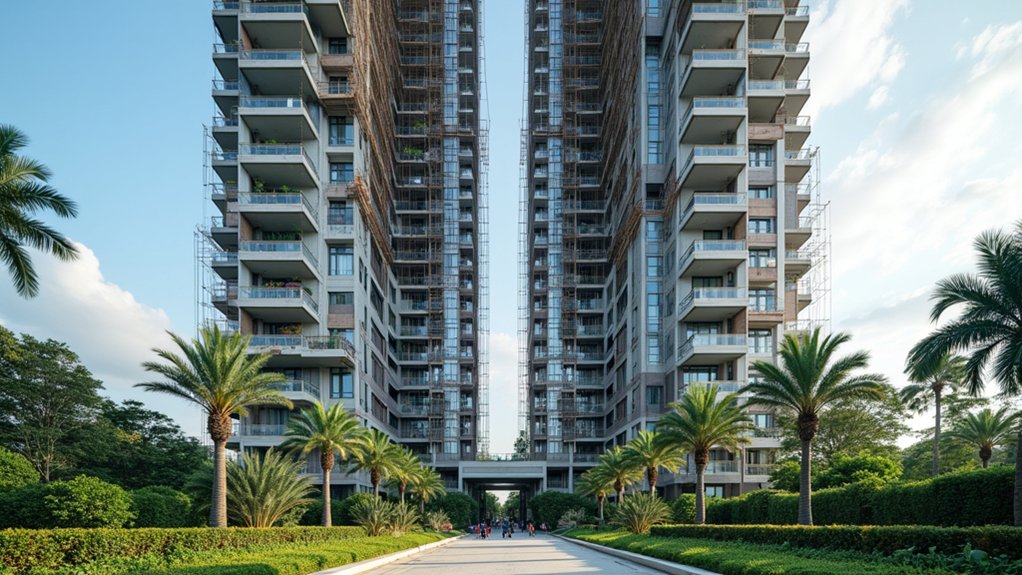

After nearly two decades of buyer complaints and high-profile defect scandals — from water-damaged ceilings to crumbling walls — Singapore’s authorities have finally drawn a hard line against developers who consistently deliver shoddy work. Starting May 22, 2026, errant developers can be barred from selling units in new projects for up to five years and banned from bidding in government land sales for residential sites for the same duration.
What makes this framework genuinely different from past measures is the reach beyond the corporate entity itself. Directors and substantial shareholders can now be personally penalised if authorities determine they exercised oversight or control over the offending projects. That’s a significant shift. Previously, a developer could theoretically restructure, rebrand, and re-enter the market. This framework closes that door considerably.
Here’s the contrarian read: some industry veterans argue these rules will hurt smaller, leaner developers more than established players with deep legal and compliance teams. The big boys can absorb the administrative burden. It’s the mid-tier developers — many of whom are genuinely trying to improve — who may find the compliance costs disproportionate. That’s worth watching.
For buyers and investors, the practical changes matter just as much as the penalties. Developers must now disclose their Conquas quality banding for past projects in sales documents, and site plans must clearly mark structural walls and refuse chambers. The defects liability period now kicks in on the 35th day after TOP progress payment notice, up from the 15th — giving us more time to inspect properly. If you’re buying off-plan, these disclosures are your new baseline for due diligence.
Think back to the controversy surrounding certain mass-market condos in the early 2010s, where buyers only discovered pervasive finishing defects months after moving in. Those cases helped shape public pressure for exactly this kind of reform. We’ve been waiting a long time. Notably, Normanton Park’s sales ban, imposed in January 2019 on Kingsford Huray Development, was only lifted on November 30, 2020, after rectifications were completed and a related project was finished. The frameworks were jointly issued by the Ministry of National Development, URA, and the Building and Construction Authority.
The real test comes when the first developer faces actual disqualification. That moment — whoever it involves — will define whether these rules carry real weight or simply gather dust as a deterrent that’s never deployed. These accountability measures arrive alongside broader government efforts to rejuvenate Singapore’s aging housing stock, including an active review of the Land Titles (Strata) Act to modernise collective sale processes and urban redevelopment frameworks.