
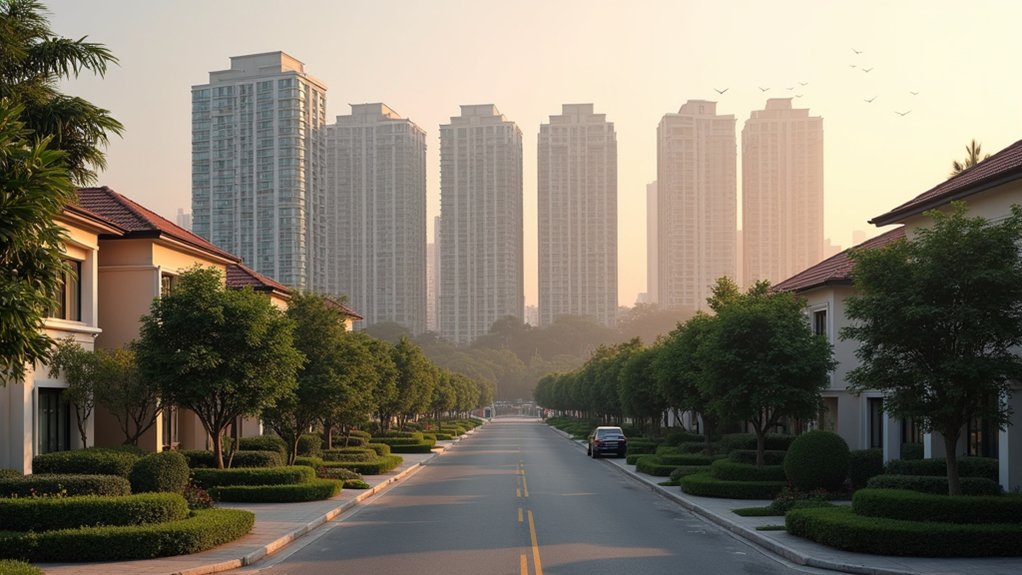

Singapore’s private residential market posted a measured 0.3% quarter-on-quarter increase in prices in the first quarter of 2026, according to preliminary data, marking a clear moderation from the 0.7% growth recorded in Q4 2025 and indicating a more restrained pace of appreciation as the market continued to stabilize after the stronger momentum seen last year. The year-on-year comparison still pointed to continued appreciation, albeit at a controlled rate, and the latest trajectory remained broadly aligned with Urban Redevelopment Authority projections for full-year 2026 price growth of 2.5% to 4.5%. This continued moderation also followed a 3.4% increase in private home prices in 2025, underscoring a slower growth trend.
Singapore private home prices rose 0.3% in Q1 2026, extending gains at a more measured pace as market conditions stabilized.
Performance across market segments was uneven. Non-landed homes registered mixed movements across the Core Central Region, the Rest of Central Region, and the Outside Central Region, reflecting variations in transaction patterns, launch timing, and buyer preferences. In the CCR, pricing adjusted in response to deal composition and demand characteristics, while the RCR continued to draw both investors and owner-occupiers. The OCR, supported by the carry-through from robust new launch sales in Q4 2025, maintained relative momentum. Landed housing followed a separate price trajectory, distinct from the apartment and condominium market. Comparable market patterns in earlier periods also showed the OCR achieving record sales momentum, with 2,238 new units sold in a single quarter.
Transaction volumes stayed within historical ranges during the quarter, suggesting that activity levels remained functional even as price growth cooled. New launch sales played an important role in shaping market dynamics and price discovery, with developer transactions concentrated in selected projects and locations. At the same time, resale activity in the secondary market reflected shifting preferences between newly introduced stock and existing inventory, contributing to changes in transaction composition across regions and housing types. Notably, Singaporeans accounted for 87% of purchases in January 2026, continuing a trend of dominant local buyer participation that had grown markedly since the first quarter of 2023, when their share stood at 74.0%.
Supply conditions remained an important policy variable. Under the Government Land Sales programme, the confirmed list for the first half of 2026 released sites capable of yielding about 9,200 private residential units, while additional capacity remained available through the reserve list. Unsold uncompleted inventory continued to record healthy absorption, indicating that the pipeline was being managed in line with housing market stabilization objectives.
In the leasing market, the private residential rental index posted modest quarterly growth, median monthly rents edged up incrementally, and leasing volumes increased quarter on quarter. Interest rates, including movements in SORA, continued to influence mortgage affordability, investor yield calculations, and broader market sentiment.