
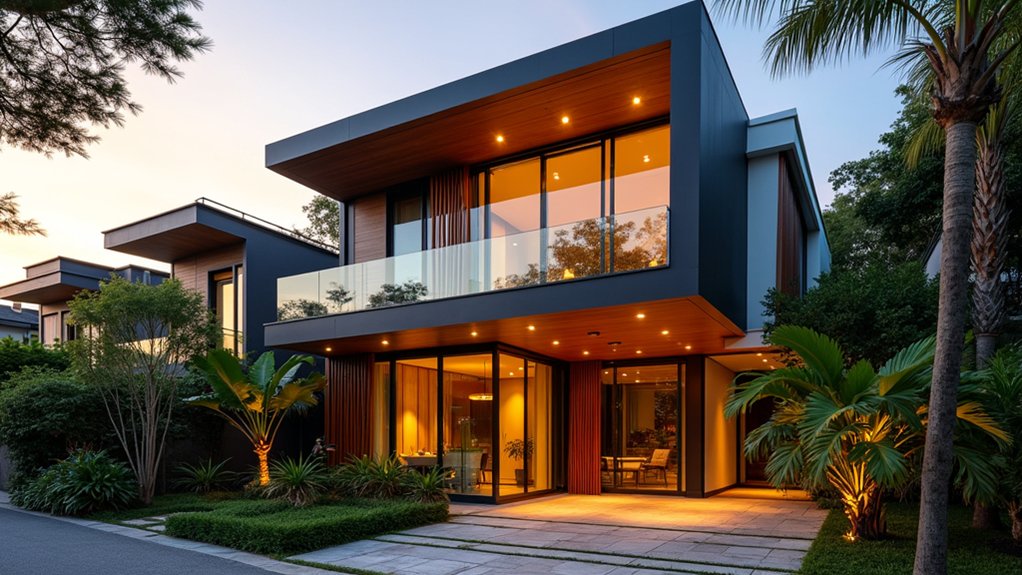

Landed residential properties closed in 2025 in marked defiance of the broader housing market slowdown, as existing-home sales rose 5.1% month-over-month in December and, after seasonal adjustment, reached their strongest level in nearly three years. Even as the year as a whole was defined by record-high prices and historically low transaction volumes.
Sales advanced across all four major U.S. regions from November to December. On a year-over-year basis, activity increased in the South, held flat in the Midwest and West, and contracted in the Northeast. This underscores the uneven geography of demand. The December 2025 housing snapshot showed 4.35 million sales and a median price of $405,400, highlighting how landed homes outperformed despite tight inventory conditions.
Sales rose nationwide month-over-month, yet only the South grew annually, highlighting stark regional demand imbalances
The apparent contradiction between weak annual volumes and a vigorous year-end rebound was mirrored in pricing behavior. Markets identified as the “hottest” in 2025, many of them dominated by landed single-family stock, registered home price appreciation of at least 9% over the year. Even as nationwide annual price growth decelerated to 2.4% by November, according to Homes.com data. This divergence reflected localized supply-demand imbalances rather than a broad-based upswing.
A notable structural realignment occurred at the regional level, with the Northeast and Rust Belt displacing much of the Sun Belt in the 2025 Housing Heat Index. New Haven, Connecticut; Rockford, Illinois; and York–Hanover, Pennsylvania, were among five top-ranked markets in northern or Rust Belt locations. These markets were supported by relatively accessible pricing and constrained inventory. Norwich–New London, Connecticut exemplified this shift, climbing from 54th in 2023 to 3rd in 2025. It ranked 23rd for active listings per 1,000 residents and 42nd in days on market, a configuration indicative of tight supply and brisk absorption. Smaller Northeastern and Rust Belt metros, in particular, saw outsized gains as affordability and regional economic stability drew in buyers frustrated with overheated Sun Belt hubs.]
In contrast, Sun Belt metros— which had experienced pandemic-era appreciation exceeding 40% year-over-year in some submarkets— underwent a pronounced cooling. Four of the five coldest markets in 2025 were in Florida—Cape Coral–Fort Myers, Punta Gorda, North Port–Sarasota–Bradenton, and Naples–Marco Island. In these areas, substantial new construction, rising insurance premiums, and higher property taxes collectively increased carrying costs and allowed inventory to rebuild.
The Federal Housing Finance Agency’s House Price Index, a weighted repeat-sales measure covering tens of millions of transactions since 1975, documented these patterns at national, regional, and metropolitan scales.
The November 2025 Monthly Index, released January 27, 2026, captured the late-year stabilization that underpinned the resilience of landed homes.