
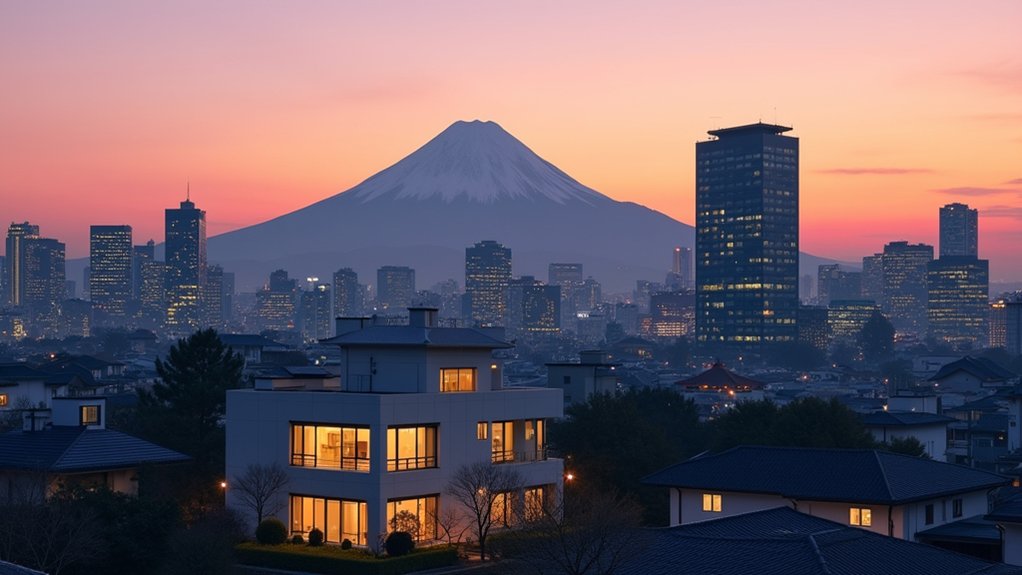

Japanese real estate has emerged as a compelling offshore allocation for Singaporean capital. This shift is driven by a confluence of currency dynamics, yield differentials, and an open regulatory framework that has redirected cross-border flows toward Tokyo, Osaka, and increasingly secondary cities.
The sharp depreciation of the yen has been central to this realignment. With 2025 levels allowing one Singapore dollar to purchase 117.6 yen, this represents roughly a 12% gain in purchasing power versus early 2022. It also enables US$400,000–500,000 to secure larger floor areas or higher-grade districts than previously feasible. Assets in Tokyo’s Asakusa district transacted below US$380,000 exemplify this improved affordability. This currency-driven advantage is reinforced by record investment volumes above JPY 6 trillion in 2025, underscoring the strength of both domestic and foreign capital inflows.
Consensus expectations for yen weakness to persist beyond end-2026 continue to underpin foreign direct investment inflows framed as a currency-advantaged entry point. As Singapore-based investors reassess global housing trends, they are increasingly drawn to Japanese assets that incorporate climate resilience features, mirroring the rising premium placed on sustainability and green-certified developments across Asia-Pacific markets.
Income performance reinforces this appeal. Osaka has delivered rental yields of about 5% in 2025, compared with Tokyo’s 3%. Multi-family apartment assets across Japan commonly price to income returns in the 5.0–5.5% band. Rising rents, including Ginza high street levels projected to reach JPY 299,500 per tsubo by end-2027—up 4.7% from Q3 2025—support these yields. Low vacancies and robust rental growth in Tokyo and Osaka office stock further bolster demand.
Inbound tourism, with 37 million arrivals in 2024 and a potential to exceed 40 million in 2025, further strengthens demand for short-stay and hospitality-linked residential formats.
Financing conditions remain accommodative by global standards. With a benchmark policy rate of 0.5%, still below Australia or the UK, and domestic lenders broadly supportive despite incremental hikes, borrowing costs have underpinned performance in Tokyo and Osaka offices. Minor anticipated rate increases from a low base in 2026 are expected to be counterbalanced by steady rent growth. A potential US recession may lead to global interest rate cuts, creating further downward pressure on borrowing costs across developed markets.
Push factors in Singapore have accelerated this rotation. Additional Buyer’s Stamp Duty elevates acquisition costs for multiple domestic properties. By end-2025, Singaporean buyers accounted for nearly half of transactions in select Japanese niche developments, up from 30% a year earlier, overtaking Hong Kong investors as the leading foreign buyer cohort for major platforms.
Japan’s absence of foreign ownership restrictions, coupled with record investment volumes above JPY 6 trillion in 2025, further enhances its attractiveness. The 2026 outlook favors multi-family, Grade B offices, and emerging secondary markets such as Nagoya and Fukuoka. This consolidates Japan’s status as a key destination for Singaporean capital.